
Arrest Warrants in Cumberland County
In Cumberland County, new criminal complaints start with the District 10 magistrate. That office is the local route for initial process. The backstop is Virginia Code section 19.2-72, which spells out how a complaint reaches a judicial officer. Sworn facts must show probable cause. An arrest warrant that issues identifies or describes the accused, states the offense, and directs an authorized officer to bring the person before a court or judicial officer. For an existing case, use the clerk. The magistrate is only the front end, and the clerk tracks the court events that follow.
Cumberland County Arrest Warrant Probable-Cause Review
Cumberland County follows state procedure here. Not every police report becomes a warrant. A sworn complaint and a probable-cause decision come first, and in some misdemeanor cases a summons replaces arrest process entirely. The offense and the court record drive the exact route. Read the Virginia arrest-warrant statute for the framework the General Assembly set.
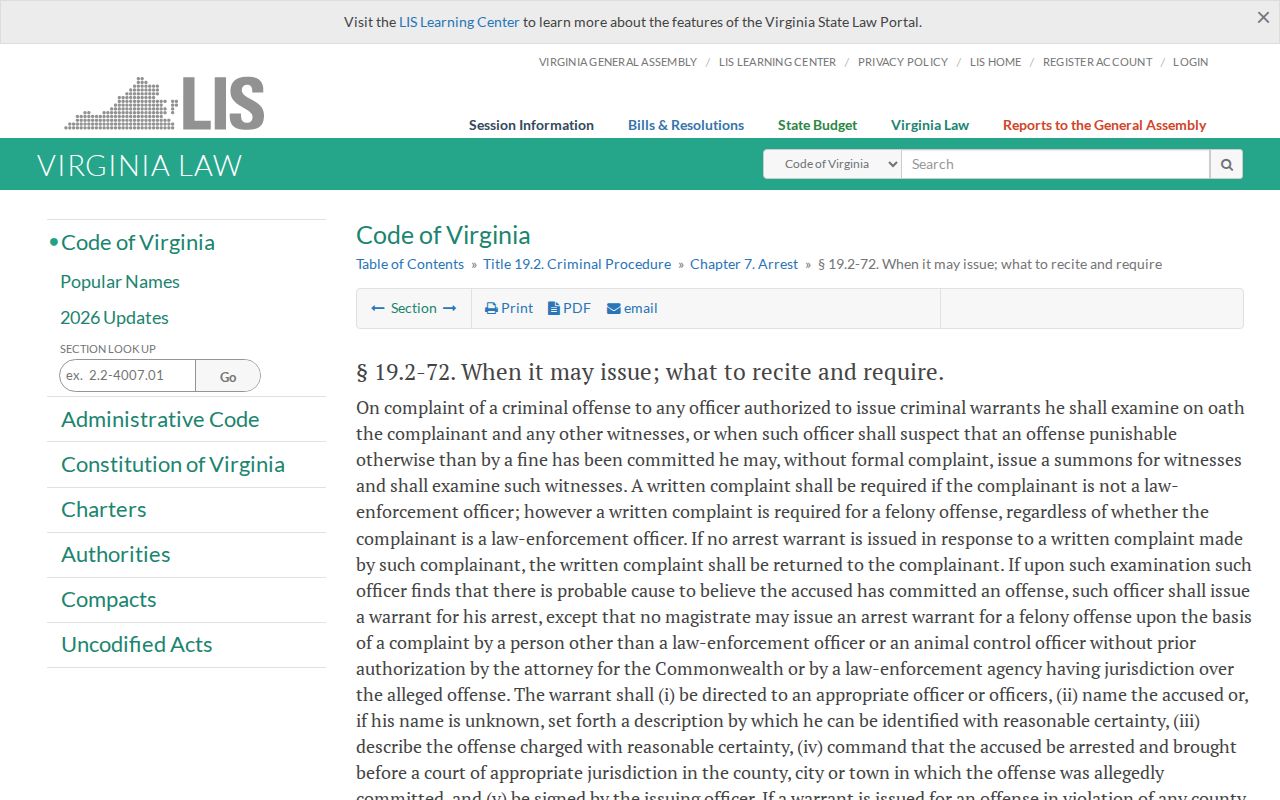
This statute sets out the process a magistrate must follow; it will not tell you whether any specific Cumberland County case carries an active warrant.
What a Cumberland County Arrest Warrant Contains
Cumberland County publishes no arrest-warrant listing or sample format. Virginia law and Rule 7C:3 still describe what process must contain, though the county posts no public number schema or bond field. If a court paper is in hand, read its case reference. Ask the clerk what each entry means.
| Case reference | Use the number on the complaint or court paper |
|---|---|
| Accused | Name or description as allowed by law; private details are not reproduced here |
| Offense | The offense stated in the process |
| Issuing officer | Judicial officer or magistrate acting within authority |
| Command | Bring the person before a court or judicial officer |
| Execution / return | Separate event information under the warrant record |
How Cumberland County Arrest Warrants Are Served
The Cumberland Sheriff's Office routes criminal process and service questions. Virginia Code section 19.2-76 governs execution and return of warrants, capiases, and summonses. Issuance, execution, and return are separate events. A docket line alone will not tell you whether an officer has served the process, so confirm with the clerk or the office involved. The sheriff's general line is 804-492-4120. Cumberland County has no public online warrant list, posted status form, or update schedule. Routine records questions belong on an office line, not emergency dispatch.
Cumberland County Felony Arrest Warrant Route
In Cumberland County, a felony complaint often begins in General District Court for preliminary proceedings. Circuit Court handles the felony trial and any appeal. Those are different docket stages. A case number may change as the case moves. Ask whether a file remains in GDC or has moved to Circuit before relying on one court search. The Circuit clerk sits at 1 Courthouse Circle, with mail to P.O. Box 8, Cumberland, Virginia 23040. Call 804-492-4442 during weekday office hours, 8:30 a.m. to 4:30 p.m. The official Circuit Court page lists clerk and court details.
Cumberland County Arrest Warrant Execution and Return
Execution is the officer's job after process issues. A return records what happened. It may note execution or simply that the person was not found. That report is not a recall, a bond decision, or a final outcome. Cumberland County has no public execution feed. Ask the sheriff about its own service record. Ask the clerk about the case docket. Virginia Code § 19.2-76 sets the execution-and-return framework, and the clerk can explain a court entry but cannot give legal advice on the warrant's validity. For a federal matter, use a separate route: Cumberland County lies in the Western District of Virginia, and a county sheriff page cannot confirm federal process.
Arrest Warrant vs Summons vs Bench Warrant
Virginia procedure draws sharp lines between these papers. A summons directs a person to appear. A capias may follow a court obligation left unmet, while an arrest warrant follows a complaint and a probable-cause review. In Cumberland County, read the title on the paper and note the issuing court before acting on it.
| Process | Common basis | Record question |
|---|---|---|
| Arrest warrant | Complaint and probable cause | Which officer issued and which agency executes it? |
| Summons | Appearance required without initial arrest | What is the return date and court? |
| Capias / bench warrant | Existing court obligation, including some FTAs | What was missed and what step does the court require? |
Cumberland County Arrest Warrant Magistrate Questions
The District 10 magistrate serving Cumberland County reviews criminal complaints, may issue warrants or summonses, and conducts bail hearings. Call 804-492-3570 for initial process or bail routing. The magistrate is not a substitute clerk for an existing Circuit or General District docket. There is no public walk-in surrender schedule. The state's magistrate services description explains the role. The county posts no bond table, accepted payment methods, or same-day processing instructions.
What to Do If There Is a Warrant for You
Confirm the court first. Ask what the record shows. Is it an arrest warrant, a capias, a summons, or a failure-to-appear entry? The clerk or counsel can tell you what action comes next and whether a motion or surrender needs coordinating. Cumberland County posts no bond table, payment method, or identification checklist, so call before appearing. After the court acts, ask what order, docket entry, or written clerk confirmation will show the result. Paying on a fine plan does not automatically recall a capias. If custody is the question, Piedmont Regional Jail is a separate channel in Cumberland County, but its lookup is not a warrant check.
Important: Speak with a Virginia attorney about your case and confirm the court, location, and release terms before making an in-person appearance.
The Cumberland County bench-warrant page explains the separate capias route.
Cumberland County Arrest Record Follow-Up
A name, case number, or hearing date is all you need to try OCIS. It covers adult cases. It does not reach every court, though, and confidential matters stay out. A blank result proves little. Check the spelling, pick the right locality, then call the clerk with your question. Other offices split the rest: the Cumberland County sheriff handles execution routing, and the magistrate takes initial-process questions. County FOIA works for records that already exist, subject to exemptions, but it cannot force a new public warrant database. For the fuller map of offices and case types, start with the Cumberland County warrant records overview, and ask whichever office holds the record for the current entry.